
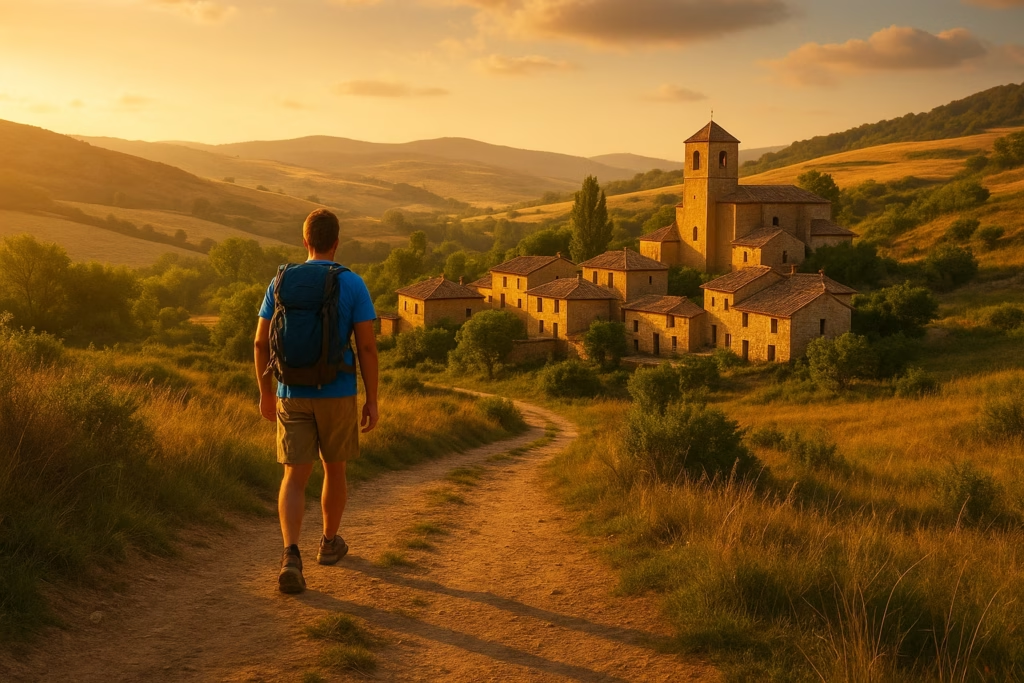
Spain offers a captivating mix of mountain ranges, Mediterranean coastlines, and sun-drenched trails steeped in culture and history. From the snow-capped Pyrenees to the coastal paths of Andalusia, every region brings its own rhythm, cuisine, and landscapes. But hiking Spain requires preparation — summer heat can be intense, trails can span vast distances, and local customs vary by region.
At Hiking Equipped, this guide covers Spain’s best hiking routes, weather patterns, essential gear, and practical travel logistics so you can explore the Iberian Peninsula safely and confidently.
➡ Read more: Weather Awareness – Reading the Sky and Forecasts, Hiking Tent Seasonal & Weather Considerations, Baseplate Compass Guide.
Top Hiking Routes in Spain
Camino de Santiago (Way of St. James) – Spain’s most iconic pilgrimage route spans hundreds of miles from the Pyrenees to Santiago de Compostela. Trails like the Camino Francés and Camino del Norte offer historic towns, affordable lodging, and deep cultural immersion.
Picos de Europa National Park – A paradise for mountain lovers, this northern gem blends alpine meadows with dramatic limestone peaks. Expect steep climbs, unpredictable weather, and unforgettable vistas.
Sierra Nevada Trails – Near Granada, these trails reach Spain’s highest peaks — including Mulhacén (11,413 ft). Summer offers clear skies, but temperatures drop sharply at altitude.
Pyrenees High Route (GR11) – Stretching along Spain’s border with France, this demanding long-distance trail rewards experienced hikers with pristine lakes, glacial valleys, and mountain refuges.
Coastal Trails of Costa Brava and Andalusia – Gentle Mediterranean paths lead through fishing villages, cliffs, and beaches — ideal for day hikes or short treks with plenty of cultural flavor.
Spain’s landscapes are as diverse as its culture—from sun-washed coastlines to dramatic mountain ranges. In this short video by We Travel the World, discover five of the country’s most unforgettable hiking trails. Watch to explore rugged peaks, seaside paths, and scenic routes that showcase Spain’s natural beauty and year-round hiking appeal.
Weather Awareness in Spain
Spain’s weather varies widely between regions. The northern coast (Galicia, Basque Country) is lush and rainy, while central plateaus are hot and dry. In the south, Andalusia’s summer sun can be extreme, but winter hiking is ideal.
Tips for managing Spanish weather:
Start early to avoid midday heat in summer.
Carry plenty of water; dehydration is a serious risk on inland trails.
Layer your clothing — mountain mornings can be cool, even in July.
Watch for afternoon thunderstorms in the Pyrenees.
Use sun protection: hat, sunscreen, and UV-rated clothing.
➡ Read more: How to Dress for Changing Trail Conditions.
Essential Gear for Hiking Spain
Tents – Choose lightweight, well-ventilated tents for dry, warm climates. In the Pyrenees, a three-season model with good wind resistance is ideal.
Stoves – Gas canisters are readily available in most cities; alcohol stoves work well for ultralight hikers.
Navigation Tools – GPS and phone apps are helpful, but carry a paper map for rural routes where coverage fades.
Clothing – Breathable, moisture-wicking fabrics are key. Always bring a light shell for mountain weather.
Footwear – Durable hiking shoes or boots with solid grip are essential for rocky terrain.
➡ Read more: Backpacking Stove Guide.
Safety & Trail Skills for the Iberian Peninsula
Spain’s trails are generally well-maintained, but conditions can vary drastically.
Navigation – GR routes (marked in red and white) are reliable, but remote mountain paths may be faint.
Hydration – Always carry purification tablets; some rural sources may be unsafe.
Emergency Preparedness – Cellular coverage can drop in remote mountains; consider a satellite communicator.
Wildlife Awareness – Wild boars, snakes, and livestock are common; give animals space.
Trail Ratings – PR (short routes) and GR (long routes) are standardized markers; check local difficulty levels.
➡ Read more: Trail Safety Tips, GPS vs Compass Navigation.
Planning Your Spanish Hiking Trip
When to Go – Spring (April–June) and fall (September–October) offer the best balance of weather and trail conditions.
Camping vs. Lodging – Wild camping is restricted in many areas. Spain’s refugios and small guesthouses (albergues) offer comfort and cultural connection.
Transportation – Trains and buses link major trailheads; rental cars help access rural routes.
Food & Water – Tap water is generally safe, but confirm locally. Stock up before long rural stretches.
Cultural Stops – Many trails pass ancient monasteries, olive groves, and vineyards — embrace the slower pace.
➡ Read more: Trail Nutrition & Hydration Tips.
Practical Travel Logistics for Hiking in Spain
➡ Read more: ATMs & Currency Exchange for International Hikers – ATMs are widespread; euros are the national currency. Exchange rates are best at banks.
➡ Read more: Credit Cards & Business Hours for International Hikers – Credit and debit cards are accepted almost everywhere. Shops often close mid-afternoon (siesta) and reopen later.
➡ Read more: Local Laws & Customs for International Hikers – Respect quiet hours in small villages. Alcohol purchase age is 18+.
➡ Read more: Driving & Transportation Tips for International Hikers – Drive on the right; seatbelts required. Rural roads can be narrow and winding.
➡ Read more: Emergencies & Health Access Abroad – Dial 112 for emergencies. Pharmacies (farmacias) are well-marked with green crosses.
➡ Read more: Electricity & Internet Access for International Hikers – Type C & F plugs, 230V/50Hz. Wi-Fi is common in lodgings and cafés.
➡ Read more: Language & Communication Tips – Spanish (Castellano) is spoken nationwide, but Catalan, Basque, and Galician vary by region.
➡ Read more: Maps & Navigation Apps for International Hikers – IGN maps (Instituto Geográfico Nacional) are reliable; Komoot and AllTrails also perform well in Spain.
➡ Read more: Police, Safety & Security Tips – Spain is generally safe. Guardia Civil patrols rural areas; theft can occur in crowded tourist zones.
➡ Read more: Post Office & Telephone Services Abroad – Correos offices provide postal and parcel services.
➡ Read more: Time Zones & Weather Updates for International Hikers – Spain uses Central European Time (CET) and CEST in summer. Check AEMET or El Tiempo for forecasts.
Conclusion
Hiking Spain is a journey through culture, cuisine, and natural wonder. From mountain summits to seaside trails, every path reveals the country’s rich diversity. With the right gear, preparation, and respect for local customs, your Spanish adventure will blend challenge, discovery, and joy.
So whether you’re following the Camino de Santiago, exploring the Picos de Europa, or tracing the sunlit coastlines of Andalusia, Spain’s trails promise a hiking experience that’s both soulful and unforgettable.
🧭 Trail Comfort Tip: Restrooms on England’s Fells & Moorlands
England’s Lake District, Peak District, and Yorkshire Dales feature long stretches of open fells and moorlands with limited privacy and no on-trail restroom facilities. Hikers typically step off-trail to find shelter behind a rise, stone wall, or patch of heather. Follow Leave No Trace practices by moving well away from paths and water sources, digging a small cathole if needed, and packing out any toilet paper. In valley towns, pubs, cafés, and visitor centers usually offer restrooms before or after your walk.
Hello there! Do you use Twitter? I’d like to follow you if that would be ok.
I’m definitely enjoying your blog and look forward to new updates.
I was thinking about signing up for X but not sure yet. Let me know what you find interesting about by blog post. I have a companion site at forwardgeared.com.