Few things beat the joy of sharing a trail with your four-legged friend, but hiking with dogs requires more than clipping on a leash and heading out the door. From trail etiquette and leash laws to paw-friendly terrain and emergency readiness, a little planning ensures both you and your pup stay safe—and welcome—on every adventure. In this guide, we’ll cover the essentials: how to interpret dog-friendly trail rules, teach polite passing on narrow single-track, and prevent confrontations with wildlife or other hikers. You’ll learn to read canine body language for early signs of fatigue or overheating, set a sensible pace, and choose the right hydration and nutrition strategy for longer climbs.
We’ll also break down the gear that matters most: hands-free leashes, padded harnesses, collapsible bowls, paw protection, cooling vests, and compact first-aid kits designed for dogs. Whether you’re planning a quick local loop or a multi-day backpacking trip, outfitting your dog properly reduces strain, improves comfort, and minimizes risk. With the right etiquette, safety practices, and gear checklist, you and your canine companion will hike farther, tread lighter, and enjoy every mile together.
Bringing your dog on the trail can make every hike more fun—but it also means thinking ahead about safety, hydration, and trail etiquette. In this helpful video, Orvis, a trusted maker of quality dog and outdoor gear, shares expert tips for keeping your canine companion comfortable, healthy, and well-behaved on every adventure.
New to trail life? See Hiking for Beginners: Trail Skills & Gear Basics
• Check the forecast before any dog-friendly hiking day with Weather Awareness – Reading the Sky & Forecasts.
👣 Before You Buy — Which Leash Fits You?
Ask yourself:
- How strong is your dog? Large or pull‑prone pups may be challenging without proper training.
- What activities are you planning? Runs and hikes benefit from bungee setup and waist belt stability.
- Do you need hand control backup? Dual‑handle options offer a quick-hold handle at traffic or surprises.
- Do you want multi‑mode flexibility? Leashes like Rousse’s or Gotham let you switch between waist, handheld, crossbody or tether.
📊 Comparison Quick Guide
Amazon Basics Hands‑Free Dog Leash
Budget-friendly (~ $16) and Amazon branded. Adjustable waist belt with shock‑absorbing bungee and reflective stitching.
Includes dual padded handles for momentary hand control. Great all‑around basic option.
Ruffwear Flagline Hands‑Free Leash
Lightweight, durable webbing inspired by rock‑climbing gear.
Adjustable, can be worn at waist or extended for traditional handheld use.
Built-in pick-up bag pocket and solid Crux Clip, designed for active users.
Zee Dog Gotham Hands‑Free Leash
Versatile 4‑way use: waist belt, crossbody, long leash, or tether mode.
Easy‑lock “E.Zee Lock” for quick tethering at rest spots.
Reflective and adjustable—ideal for hiking, casual walks, or training.
Hiking with Dogs: Dog-Friendly Trail Finder (Rules, Access, Leash Laws)
Researching a trail’s dog policy before you load the car saves tickets, turnaround heartache, and overheated paws. Land-management rules vary widely—from leash-optional national forests to “no pets past this point” wildlife refuges—so treat every destination like new terrain. Use the checklist below to confirm that your chosen route is truly dog-friendly, paw-safe, and legal year-round.
Start with the Managing Agency’s Website
Every trail sits on land managed by someone: National Park Service, U.S. Forest Service, BLM, state parks, or local preserves. Search “Pets” or “Dogs” on the official page. Note:
Leash length limits (often 6 ft / 2 m max).
Restricted zones (beaches, swimming holes, archaeological sites).
Seasonal closures for wildlife nesting, lambing, or extreme heat.
If rules are unclear, call the ranger station—five minutes on the phone beats a citation at the trailhead.
Crowd-Sourced Intel for Dog-Friendly Hiking
Platforms like AllTrails, Gaia GPS, Hiking Project, and BringFido flag dog-friendly routes and display recent hiker reviews. Filter for “dogs on leash” or “dogs off leash” and read trip reports for firsthand intel on water sources, goat-head thorns, or aggressive wildlife. Download offline maps so you can double-check boundaries in patchy service zones.
Terrain Checks for Paws, Heat, and Exposure
A “dog-friendly” label doesn’t guarantee safe footing. Scan topo lines and user photos for:
Sharp scree, lava rock, hot slickrock, or ironwood roots.
Long, exposed ridge walks with no shade or water.
Ladder climbs, slot canyons, or steel cables that require lifting your dog.
Plan breaks near water and carry booties or paw wax for abrasive miles.
Check for Local Leash Ordinances and Leash-Free Hours
Some municipal parks allow off-leash dogs only before 10 a.m.; others require leashes within 100 ft of trailheads. Bring a backup hands-free leash in case signage changes at the gate.
Pack Paperwork When Hiking with Dogs
Carry proof of rabies vaccination and your dog’s ID tags/microchip number in your phone or first-aid kit. Many border trails and ferries ask for it.
Bottom line: Five minutes of research—agency site, trail app, quick ranger call—ensures your pup hikes legally, safely, and comfortably. Verify access, prep for the terrain, respect leash laws, and you’ll both enjoy a stress-free day on the trail.
Trail Etiquette for Hiking with Dogs: Leash Skills, Polite Passing & LNT
Sharing a trail with your dog is rewarding—unless poor etiquette spoils the experience for wildlife, fellow hikers, or the trail itself. Follow these best-practice guidelines to keep everyone safe, comfortable, and happy, while ensuring dogs remain welcome on public lands.
Leash Manners Start at the Trailhead
Even if local rules allow off-leash travel beyond a certain point, clip in when you unload. A six-foot (two-metre) leash offers control without tangling other hikers. Train your dog to walk at your side, then cue a short “heel” when passing tight sections, bridges, or trailhead information boards.
Passing People, Kids, and Bikes While Hiking with Your Dog
On single-track, yield to uphill traffic and step to the side before oncoming hikers or bikes arrive. Call out a friendly, “Passing on your left with a dog,” or “Trail clear?” to avoid startling others. Keep your dog close—arm’s-length or shorter—and place yourself between the leash and the oncoming party. If your pup lunges to greet, step completely off trail and let traffic flow.
Greet Other Dogs with Caution
Never assume another dog is friendly. Ask first: “Okay to say hello?” If granted permission, keep leashes loose and let dogs sniff briefly nose-to-tail. At the first sign of tension—raised hackles, stiff posture—end the greeting and move on.
Leave No Trace for Dogs (Waste, Wildlife, and Noise)
Pack it out: Bag waste immediately and stash it in a sealable “poop tube” or a double-bagged pouch you clip to your pack. The “pick it up later” pile at the trailhead lot is both illegal and unsanitary.
Stay on durable surfaces: Don’t let your dog shortcut switchbacks or trample vegetation to sniff every burrow.
Wildlife respect: Leashes prevent chasing and injury—for elk calves, ground-nesting birds, and your dog alike.
Manage Noise and Space When Hiking with Dogs
Continuous barking disturbs wildlife and ruins the quiet many hikers seek. Carry a favorite treat or toy to redirect excitement, and schedule breaks away from busy viewpoints so your dog can decompress.
Know When to Leash Up Again
Approaching cliff edges, busy viewpoints, or fragile alpine tundra? Clip in, shorten the line, and keep moving until you re-enter safer, more durable terrain.
Practicing these leash skills, passing techniques, and Leave No Trace habits keeps trails welcoming for all users. A well-mannered dog and a courteous handler not only protect wild places—they turn every encounter into a positive ambassador moment for hikers with pets.
Conditioning for Hiking with Dogs: Pace, Endurance & Heat Readiness
A dog that glides up switchbacks and still wags at camp doesn’t get that way by accident. Conditioning your canine—gradually boosting pace, mileage, and recovery—builds the endurance your trail partner needs while protecting joints, paws, and heart. Use the four-stage program below to turn neighborhood walks into confident summit days.
Progressive Mileage for Hiking Dogs
Start with three 20- to 30-minute brisk walks on flat ground in Week 1. Add 10 percent distance or time each week and introduce gentle hills by Week 3. By Week 4, aim for one longer outing of 60–75 minutes on mixed terrain. Keep a training log (distance, elevation, weather, energy level) to spot trends and avoid overdoing it.
Hill Intervals and Recovery Days
Once weekly, tackle a safe slope or stair set:
Warm-up 10 minutes → 1 minute uphill brisk / 2 minutes easy down → repeat 6–8 rounds → cool down 5 minutes. Uphill bursts strengthen glutes and hamstrings; downhill strolls teach controlled descents and spare joints.
Hydration, Fueling, and Early Fatigue Signs on Dog-Friendly Hikes
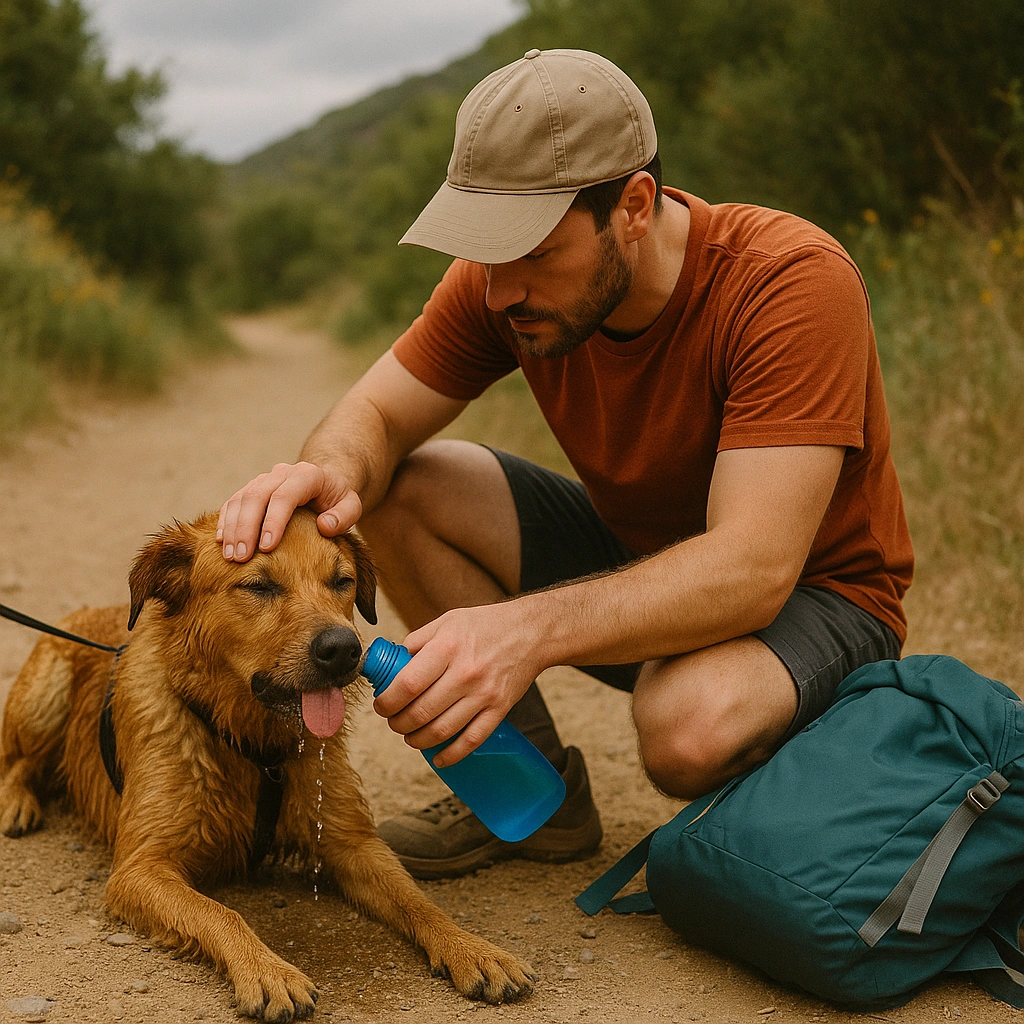
Pack 0.5–1 L of water per 10 kg (22 lb.) of dog weight for every 60–90 minutes in moderate weather—more in heat. Offer sips every rest stop; a collapsible bowl or squeeze bottle works best. Bring high-protein treats for mid-hike calories. A dog that suddenly refuses water or food may be overheated or fatigued—slow your pace and rest in shade immediately.
Overheating and Fatigue Red Flags When Hiking with Dogs
Watch for:
Heavy, rapid panting even on level ground
Thick drool, bright-red or pale gums
Lagging behind, head down, frequent stops
Wobbling, glazed eyes, or stumbling
If any appear: move to shade, wet the coat (especially belly, groin, paws), offer cool—but not ice-cold—water, and end the outing. Carry a lightweight cooling vest or microfiber towel to drape over the neck and chest on hot days.
Recovery matters
End each hike with a five-minute slow walk, paw inspection, and a light meal once breathing normalizes. Add one complete rest day after long or high-heat outings to let muscles repair.
Consistency trumps intensity. Build mileage gradually, track hydration, and stay alert to early fatigue signs. Your dog will gain the stamina to tackle longer, steeper trails—tail wagging from first switchback to final vista.
Dog Hiking Essentials: Harnesses, Hands-Free Leashes, Packs & Bowls
The difference between a joyful, wag-filled trek and a stressful slog often comes down to gear. Outfitting your dog with the right equipment keeps them comfortable, visible, and under control—letting you focus on the miles, not the mishaps. Use this checklist to dial in four essentials before your next adventure.
Picking a Trail-Ready Harness for Hiking with Dogs
Skip basic collars once you leave the pavement. A padded, multi-adjustable harness spreads force across the chest and belly, protects the trachea, and provides a sturdy lift handle for scrambles or stream assists. Features to look for:
Front & rear leash clips—front discourages pulling, rear offers relaxed cruising.
Reflective trim or LED loops for dawn starts and dusk finishes.
Two-finger fit under all straps; recheck after 15 minutes of activity to catch hot spots early.
Hands-Free Leash Systems for Single-Track Control
A waist-belt leash frees your arms for trekking poles while maintaining quick control on single-track. Prioritize:
Bungee section to absorb sudden lunges.
360° swivel clip to prevent tangles.
Traffic handle near the dog for tight passes.
Emergency quick-release buckle in case you need instant separation.
Dog Packs, Water Carry, and Quick-Deploy Bowls
Healthy adult dogs can carry 10–15 % of their body weight when properly conditioned. Start empty, then add weight gradually—balancing loads evenly in each pocket. Key details:
Low-profile saddlebags that ride high on the ribs, not the shoulders.
Breathable mesh back panel for heat release.
Compression straps to keep contents from shifting.
Conduct hourly fit checks and offload the pack during long breaks.
Collapsible Bowl & Hydration Kit
A silicone or coated-nylon bowl folds to pocket size and fills in seconds. Pair it with a squeeze bottle or dog-specific cap that snaps onto standard water bottles for one-hand pours. Plan 0.5–1 L per 10 kg (22 lb.) of dog weight for every 60–90 minutes of moderate hiking and bring canine electrolyte powder for hot days.
Quick Add-Ons
LED beacon for nighttime visibility.
Booties or paw wax for rough rock, burning sand, or icy crust.
Poop-bag holder clipped to your belt—Leave No Trace applies to pups, too.
Fit it right, pack it light, and your canine companion will log more comfortable, controlled, and carefree miles—tail wagging from trailhead to summit.
Protecting Paws on Dog-Friendly Hikes: Heat, Wildlife & Foot Care
Hot sand, icy crust, hidden thorns—your dog’s paws meet hazards long before you do. Add dehydration risk and unexpected wildlife encounters, and a carefree hike can turn urgent fast. Use the four-part plan below to keep paws healthy, temps in check, and trail days trouble-free.
Heat & Hydration: Guard Against Burned Pads and Overheating
Trail surfaces can exceed 140 °F / 60 °C by midday. Press the back of your hand to the ground for five seconds; if it’s painful, it’s too hot for paws. Hike at dawn or choose shaded routes and carry 0.5–1 L of water per 10 kg (22 lb.) of dog weight per hour in warm weather. Offer sips every rest stop—panting spikes fluid loss. Pack a cooling bandana or lightweight vest, wetting it at streams to pull heat from the core.
Booties vs. Paw Wax and a 30-Second Trail Check
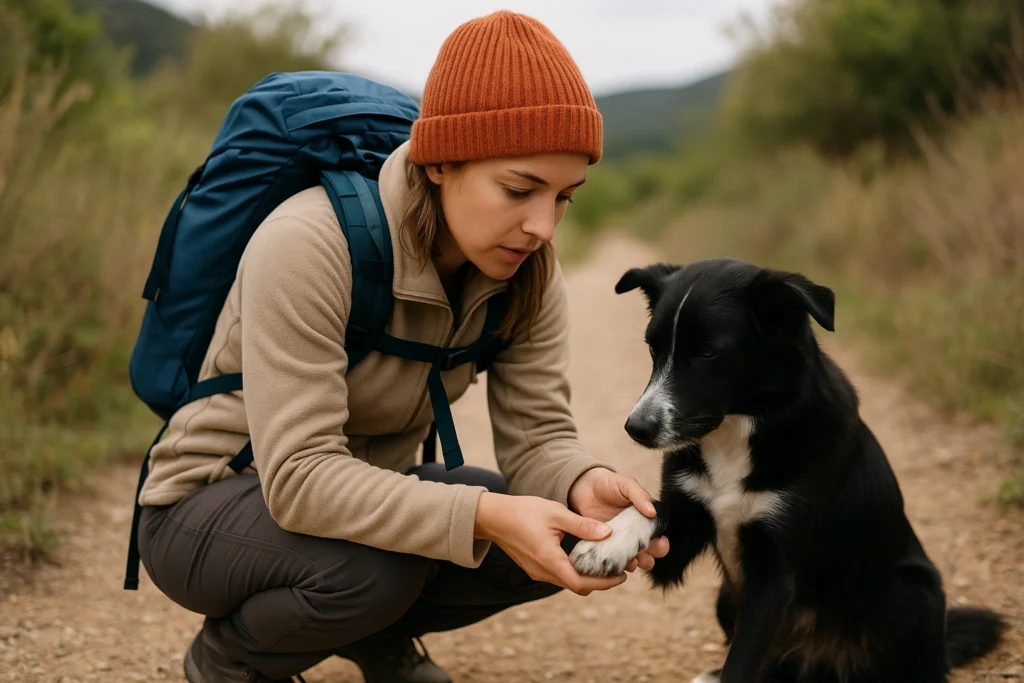
Booties protect against lava rock, scree, cactus spines, road salt, or ice balls. Fit snug (but not tight) and practice at home so your dog adapts. Paw wax is lighter for sandy or snowy miles; reapply every 5–7 mi or after water crossings. After each break, spend 30 seconds on a paw check: spread toes, inspect pads and nails for cuts, thorns, or ice buildup. Rinse with clean water and dab on antiseptic or balm if needed.
Wildlife Encounters: Snake & Toad Awareness
Keep the leash short in brushy or rocky zones where rattlesnakes sun themselves. Teach a solid “leave it” and consider rattlesnake-avoidance training or the vaccine in endemic areas. At dusk, steer clear of stagnant puddles—many toads secrete toxins. If a bite or sting occurs, stay calm, restrict movement, and head for the nearest vet; mark the time for faster treatment decisions.
Winter Salt & Ice Prep
Urban trailheads and snow-covered roads are often treated with de-icing salt that cracks pads. Rinse paws post-hike with warm water and apply balm. In deep powder, booties prevent painful ice balls and frostnip.
Hiking with Dogs Takeaway
A 60-second heat test, steady hydration, leash control near wildlife, and routine foot checks keep your dog trotting happily from trailhead to tent flap. Protect the paws, manage the heat, watch for critters—and every mile becomes another wagging success story.
Canine First Aid for Hiking Dogs: DIY Trail Kit & When to Call the Vet
Scraped paws, surprise snakebites, or a sudden bout of trail-side diarrhea can turn a fun hike into a stressful scramble—unless you’re ready. A lightweight, dog-specific first-aid kit plus clear decision rules let you fix small problems fast and seek professional help when minutes count. Follow the checklist below to keep minor mishaps from becoming major emergencies.
10-oz Trail Kit for Hiking with Dogs
Gear | Why It Matters |
|---|---|
Self-adherent wrap (2 in) & non-stick pads | Wrap paw cuts, pad tears, or limb scrapes without adhesive on fur. |
Antiseptic wipes & triple-antibiotic ointment | Clean wounds, reduce infection risk. |
Diphenhydramine (Benadryl, vet-approved dose) | First line for stings or allergic swelling. |
Tweezers or tick tool | Quick, clean tick removal; monitor bite 7–10 days. |
Saline eye drops | Flush dust, seeds, or snow melt grit. |
Emergency bootie & duct tape | Protect wrapped paws; improvise splint straps. |
Space blanket | Retains heat or makes an improvised stretcher. |
Laminated vet info & vax record | Speeds treatment at clinics or checkpoints. |
Stash everything in a zippered, waterproof pouch and inspect contents every season.
Treating Common Injuries on the Trail While Hiking with Dogs
Bandaging paws: Flush with clean water, pat dry, apply antibiotic, cover with pad, and wrap snugly—check circulation every 20 min.
Tick removal: Slide tool under tick, lift straight; clean site. Watch for lethargy, swollen joints, or fever.
GI upsets: For mild diarrhea, fast 8–12 h, offer small water sips. Persistent vomiting, blood, or collapse → vet ASAP.
Sprains/strains: Rest, cool water soak, light compression; restrict activity 48 h.
Red-Flag Symptoms and Emergency Concerns
Uncontrolled bleeding after 10 min pressure
Labored breathing, blue/pale gums, seizures, heatstroke (> 104 °F / 40 °C)
Snakebite, porcupine quills near eyes or airway
Inability to stand or walk out under own power
Use Tech to Shrink Rescue Time
Carry a satellite messenger or PLB pre-programmed with pet-specific SOS texts—“Dog injured, stable” or “Severe, need evac.” Include coordinates, injury type, and ETA to trailhead for responders.
Practice at home: Apply a wrap, remove a mock tick, and send a test SOS so you’re calm under pressure. A dialed kit, basic skills, and reliable comms ensure you and your dog can tackle wild miles—and get home safely when the unexpected strikes.
Summary: Hiking with Dogs – Trail Etiquette, Safety, and Gear
The Hiking with Dogs blog post is a complete guide for dog owners who want safe and enjoyable adventures on the trail. It covers the essential gear every hiking dog needs, including well-fitted harnesses, hands-free leashes, dog packs, collapsible bowls, and protective booties. The post emphasizes trail etiquette, from proper leash skills and polite passing to packing out dog waste and respecting other hikers.
Safety is a key focus, with tips on conditioning your dog’s endurance, recognizing early signs of fatigue, preventing overheating, and maintaining hydration. It also addresses paw care, wildlife awareness (including snakes and toads), and first-aid essentials for dogs—covering injuries, tick removal, and emergency preparedness with a DIY trail kit.
Finally, it offers advice on multi-day hiking with dogs, including managing food portions, sleeping systems, and post-hike recovery routines. The guide equips dog owners with the knowledge to hike responsibly and confidently while keeping their canine companions happy and healthy.