
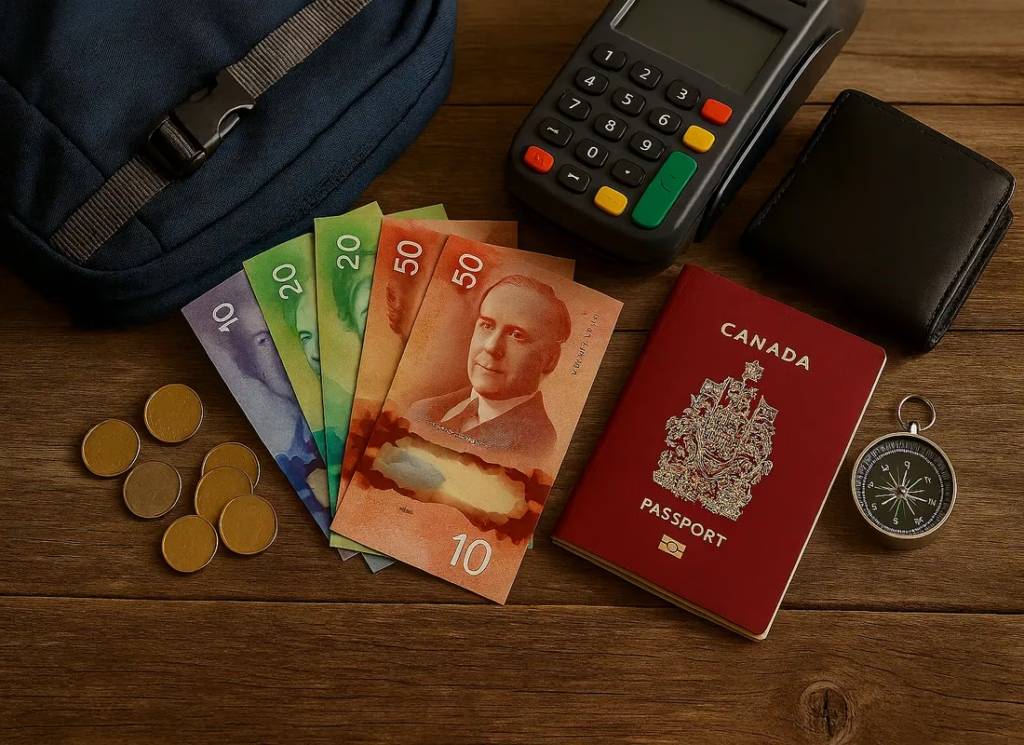
For international hikers, money & currency access for hiking in Canada is just as important as choosing the right gear. While Canada is modern and well-connected, hikers should plan ahead for rural and backcountry travel where financial services may be limited.
➡ Back to: Hiking Canada → Practical Travel Logistics → Money & Currency Access
ATMs & Money Access in Canada
ATMs are widely available in cities, airports, and towns, making money & currency access for hiking in Canada straightforward in most urban areas. However, once you leave major centers, ATM access becomes scarce (RBC ATM Locator). Small rural communities or trailhead villages may not have one at all. It’s best to withdraw enough cash before heading into remote areas.
👉 Tip: Many ATMs charge a small service fee, and your home bank may add a foreign transaction fee. Consider larger withdrawals to reduce costs, or check our guide to Credit Cards & Business Hours in Canada for more options.
Currency Exchange Rates for Hiking in Canada
Canada uses the Canadian dollar (CAD). Banknotes come in polymer form with vibrant colors, and coins (“loonies” and “toonies”) are commonly used for $1 and $2.
The best exchange rates are usually found at banks or credit unions, not at airports or tourist kiosks Bank of Canada Exchange Rates. Credit card purchases generally use competitive exchange rates, but always check for foreign transaction fees (Government of Canada – Money & Finances for Visitors).
Using Cash vs. Credit Cards on Canadian Trails
In most Canadian cities and towns, credit and debit cards are widely accepted. Visa and Mastercard are the most reliable, while American Express and Discover are less common.
In rural areas, cash is often preferred — especially at small shops, gas stations, or campgrounds. On the trail, cash may be needed for shuttles, small lodging, or supplies at remote outposts (Gear & Trail Preparation for Hiking Canada).
Preparing for Remote Travel & Currency Needs
Because Canada’s wilderness is vast and services are spread out:
Carry a mix of payment options (cash, debit, and credit).
Keep small bills and coins, since rural shops may not have change for large notes.
Plan ahead for refueling stops on long drives between trailheads (Trail Skills & Tips).
For longer backcountry trips, always consult Parks Canada – Backcountry Travel Planning before heading out.
Conclusion
Managing money & currency access for hiking in Canada is simple in urban centers but requires planning in remote regions. Always carry some Canadian cash alongside your cards and be prepared for limited services in rural areas. A little preparation ensures smooth travel — so you can focus on the trails instead of worrying about payment.