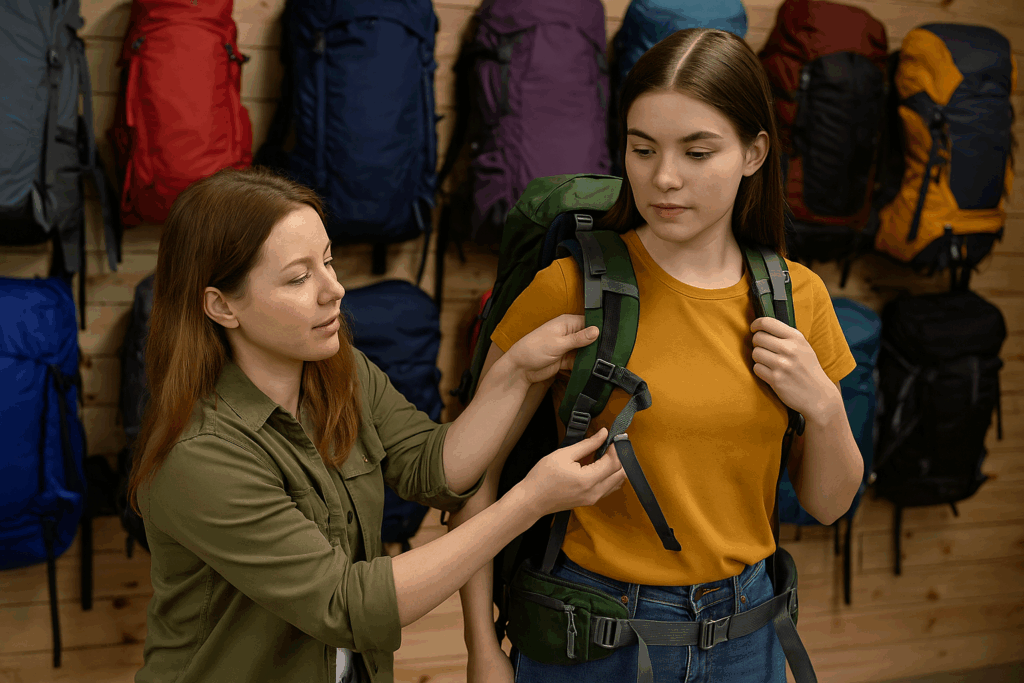
What is the best backpack fit for your back? Choosing the right hiking backpack is one of the most important decisions any hiker can make. This starts with torso length—not overall height. A pack that’s too long or too short shifts weight and strains shoulders and lower back. Measure from your C7 vertebra to your iliac crest, match that number to the brand’s size chart, and fine-tune with an adjustable suspension. Try the pack with weight, snug the hip belt to carry most of the load, and dial shoulder straps, load lifters, and the sternum strap. With the best backpack fit for your back, you’ll hike farther with less fatigue. Build strength for carry comfort in our Trail Fitness Guide.
Best Backpack Fit for Your Back: Start with Torso Length
Torso length determines frame size, strap geometry, and weight balance—the foundation of the best backpack fit for your back. For a visual walkthrough, see REI’s Backpack Advice
How to Measure C7 to Iliac Crest (Torso Length)
Tilt your head to find the C7 bump at your neck. Place thumbs on the tops of your hips, where they meet is the bottom point. Measure straight from C7 to that point with a flexible tape. Compare your number to brand charts like Osprey’s Fit & Sizing or Gregory’s Pack Fit Guide.
Match Torso Length to Brand Size Charts for Best Backpack Fit
Brands map torso ranges to sizes (e.g., 16–18″, 18–20″). If you’re between sizes, pick an adjustable system to protect the best backpack fit for your back across seasons and layers.
Hip-Belt Fit for Your Back: Put the Weight on Your Hips
Your hip belt should center over the iliac crest and carry most of the load. That single change often eliminates shoulder burn and low-back ache. Prevent hot spots with tips from our First Aid & Safety Basics.
Belt Height, Angle, and Padding for Best Backpack Fit
Set belt height first, then check that the belt angle matches your hip line. Choose padding that cushions without collapsing.
Belt Length & Closure: Get Enough Pull
Confirm buckle style and strap travel leave room to tighten with gloves and winter layers. This preserves the best backpack fit for your back when conditions change.
Shoulder Straps & Harness Shape (Comfort That Lasts)
Shoulder straps should contour without gapping. S-curved straps can relieve collarbone pressure for many women and smaller frames.
Load Lifters (~45°) and Sternum Strap Placement
Set load lifters around 45° to pull the top inward. Clip the sternum strap level with your armpits. These micro-adjustments maintain a neutral posture and the best backpack fit for your back.
Women’s-Specific & Short-Torso Options
Look for shaped straps, narrower harnesses, and sculpted belts to maintain a close, stable carry.
Frames & Suspension Systems That Improve Pack Fit
Choose support that matches your load and terrain.
Internal vs. Frameless vs. External
Internal frames balance agility and support. Frameless saves weight but needs precise packing. External frames ventilate well and carry bulky loads.
Adjustable Torso Systems for Seasonal Layers
Rails, ladders, and Velcro plates let you re-fit as layers change—key for preserving the best backpack fit for your back. Dress smart under a pack with our How to Dress for Changing Trail Conditions.
Pack Volume by Trip Type (Comfort Still Matters)
Pick capacity for route, weather, and water needs. Time your start with our Weather Awareness Guide.
Daypacks (15–30L): Don’t Skip Fit
Small packs still need torso sizing and a real hip belt. A quick re-fit can rescue the best backpack fit for your back on fast hikes.
Overnight & Multi-Day (35–80L+): Support Counts
Heavier loads demand a stiffer frame and supportive belt. Test with realistic weight to confirm comfort over hours, not minutes.
Try-On Process: Test the Best Backpack Fit for Your Back
Simulate trail conditions, not showroom strolls.
Add Realistic Weight and Walk/Stairs
Load 10–20 lb. for daypacks and 25–35 lb. for backpacking. Walk stairs, step over obstacles, and pivot. The pack should hug your back without bouncing or gapping.
Fix Gapping, Slippage, and Hot Spots Fast
Shorten torso if the belt rides low. Lengthen if straps bite your neck. Shift mass lower if the top pulls you backward. These tweaks restore the best backpack fit for your back in minutes.
Between Sizes? Keep the Best Backpack Fit for Your Back
If you’re near a size break, test both and note belt position and strap angle.
Size Down vs. Size Up (Tell-Tale Signs)
Size down if the belt creeps above your hips. Size up if straps cut near your neck or the frame hits your head.
When Adjustable Systems Win
Adjustable harnesses keep the best backpack fit for your back through seasons, weight changes, and layered clothing.
Balance, Packing, and Weight Distribution
Smart packing boosts stability and comfort. Practice hydration and fueling from our Trail Nutrition & Hydration Tips.
Pack Heavy Items Close to Your Spine For Best Backpack Fit.
Center dense gear mid-back, close to your body. Keep light, compressible items at the bottom and edges.
Fine-Tune Through the Day for Best Backpack Fit
Micro-adjust belt and straps as water and layers change to maintain the best backpack fit for your back.
Common Backpack Fit Mistakes (and Quick Fixes)
Avoid these easy errors to stay comfortable longer.
Belt Too Loose, Torso Too Long/Short
Outcome: shoulder fatigue, back sway, and chafe. Fix: tighten the belt and correct torso length.
Overweighted Lid Pulling You Back
Outcome: top-heavy feel and sore traps. Fix: move mass lower and closer to the spine.
Care & Seasonal Re-Fitting to Protect Your Pack Fit
Clean salt and dust and re-fit each season to preserve support.
Clean, Dry, and Store to Preserve Support
Rinse salt, air-dry foam, and store uncompressed. This keeps padding lively and supportive.
Re-Fit with Layers or Weight Changes
Recheck torso and belt every season. Small tweaks protect the best backpack fit for your back for the long haul.
Quick Checklist: The Best Backpack Fit for Your Back
Torso length matches size, belt centers on iliac crest.
Hip belt carries most weight, no gapping or sagging.
Load lifters ~45°; sternum strap secure, not high.
Dense items near the spine; top not over-weighted.
Walk test with real weight; adjust mid-hike as needed.
Find more backpack fit tips in our Backpacks & Fit and plan routes smarter with Essential Navigation Skills.