
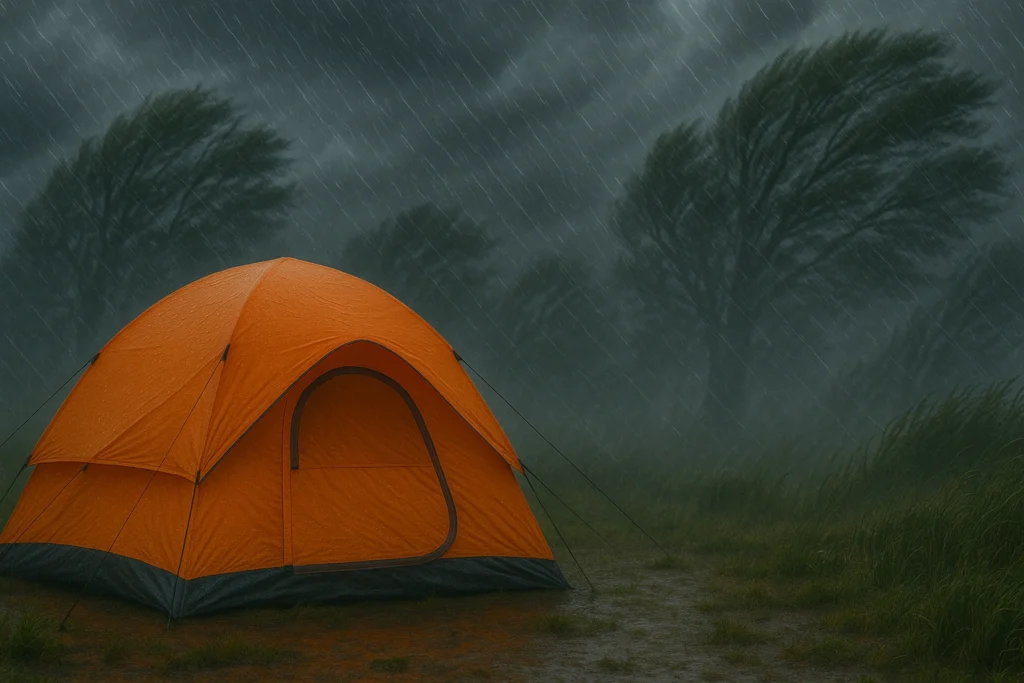
Hiking tent weather considerations starts before you leave home. Choose a tent that matches the season, then pitch for wind, rain, heat, or snow. Use forecasts, terrain cues, and smart ventilation to stay dry, quiet, and safe. These seasonal tent tips cover setup, storm strategy, and care so your shelter performs year-round. season.
Hiking Tent Weather Basics: All-Season Shelter Strategy
Choose a 3-season tent for spring through fall. It balances airflow, bug protection, and storm resistance. Pick a 4-season (mountaineering) tent for sustained wind, heavy snow, or alpine trips. Double-wall designs manage condensation best in wet climates; single-wall shelters save weight in cold, dry conditions. Check pole strength, fly coverage, and guy-out points before you buy or pack.
3-Season vs 4-Season Use for All-Weather Trips
3-season tents handle rain and moderate wind. 4-season tents add stronger poles, more fabric, and snow-load support. Bring the lightest tent that still meets your worst expected conditions.
Tent Fabrics, Poles & UV: Built for Weather Durability
Silnylon and silpoly resist rain; Dyneema saves weight. Quality aluminum poles beat budget fiberglass in storms. Sun weakens fabric, so limit UV exposure when possible.
“As an Amazon Associate, I earn from qualifying purchases.”
Wet-Weather Tent Setup: Rain & Runoff
Rain rewards careful site choice. Aim for a slight rise that won’t pool. Avoid drainage lines and depressions. Pitch the fly taut so water sheds and keep the inner body clear of the fly. Use a footprint that hides under the floor to prevent drip-back. Create clean drip lines by routing guy lines so water falls away from doors.
Hiking Tent Weather: Orientation & Doors in Rain
Face the door away from prevailing rain to reduce splash-in. If wind drives rain, use the smaller end as your windward side to cut drag.
Hiking Tent Weather: Condensation Control in Rain
Vent high and low. Crack doors or fly vents to move humid air out. Keep wet gear in the vestibule. Wipe inner walls if droplets form, and retension as fabric relaxes.
Windy-Weather Tent Setup: Low-Profile Camp Tactics
Strong wind punishes tall, loose shelters. Present the tent’s narrow end to the wind. Pitch low: shorten pole height when your shelter allows and drop the fly close to the ground.
Anchors & Angles: Stakes, Deadman & Load Spread
Place stakes at 45° from the guy point. Pre-load primary guylines first, then add secondary lines to spread force. In rocky ground, use buried rocks or deadman anchors. Check lines at bedtime and after gusts.
Quiet the Fly: Reduce Flap & Stress in Wind
Flapping steals sleep and stresses seams. Retention sagging panels and add mid-panel guys if your fly supports them. Use elastic loops to buffer gusts.
Lorem ipsum dolor sit amet, consectetur adipiscing elit. Ut elit tellus, luctus nec ullamcorper mattis, pulvinar dapibus leo.
Hot-Weather Tent Ventilation: Cool-Running Camps
Heat calls for airflow and shade. Pitch under morning shade when possible, then orient mesh panels to catch any breeze. Use the fly only if you need storm protection.
Cross-Ventilation for Summer Heat: Doors, Vents & Fly Gap
Open opposing doors or vents to create a cross-breeze. Lift fly edges slightly if bugs allow. A light-colored fly reflects heat better than dark fabric.
Sun Exposure & Fabric Life: Protect Coatings, Extend Longevity
UV breaks down coatings and fibers. Take afternoon breaks in natural shade or drape a light tarp above (with safe clearance) to protect the fly. Store the tent dry and out of the sun when not in use.
Winter Hiking Tent Weather Tips: Cold, Frost & Snow Loads
Cold demands stability and safe venting. Stamp a firm platform in snow, then let it sinter before pitching. Build a low wind wall if spindrift is bad.
Snow Loading & Pole Support: Stability in Storms
Brush off accumulating snow often. Add all available guy points and cross-brace where your tent allows. Avoid tree wells and avalanche paths.
Frost & Moisture: Venting to Limit Ice Build-Up
Even in cold, crack a vent high to reduce frost. Keep damp items in a stuff sack. Use a full-coverage fly and a groundsheet sized just smaller than the floor.
Frozen Ground Anchors: Deadman & Buried Stakes
When stakes won’t bite, use deadman anchors: bury sticks, stakes, or sacks filled with snow at right angles to the pull.
Storm Safety for Hiking Tents: Thunderstorms, Floods & Overhead Hazards
No tent is stormproof. Reduce exposure and choose safer ground.
Avoid Hazard Zones: Ridges, Lone Trees & Washes
Stay off ridgelines, summits, lone trees, canyon bottoms, and dry washes. Pick a subtle high spot away from water flow.
Lightning Safety for Hiking Tents: Spacing & Retreat
Spread your group out. Avoid metal fences and tall isolated trees. Sit on your pad to reduce ground contact. If storms persist, retreat to safer terrain.
Hiking Tent Weather: Night-Time Storm Routine
Before sleep, tighten guylines, close vents facing rain, and stage headlamps and layers. Keep stakes and extra line handy for mid-night fixes.
Seasonal Hiking Tent Care: After-Trip Maintenance & Storage
Good care extends performance across seasons.
Dry, Clean & Re-Seal: Restore Waterproofing
Air-dry completely. Wipe mud and tree sap with mild soap and water. Re-seal seams or refresh DWR if water stops beading.
Repair Small Damage Early: Mesh, Zips & Poles
Patch mesh snags and small fly tears before they grow. Replace tired shock-cord and bent stakes.
Store for the Next Season: Breathable, Cool & Dark
Loosely store the tent in a breathable sack, out of heat and sun. Keep poles and stakes separate to prevent abrasion.
Conclusion: Master Hiking Tent Weather Year-Round
When you plan for weather conditions, you trade guesswork for confidence. Choose the right shelter for the season, read the forecast and the sky, then pitch with intention—tight fly, clean drip lines, smart orientation, and solid anchors. In heat, cross-vent and protect fabrics from UV. In wind and rain, lower the profile and spread the load with well-placed guylines. In cold and snow, build a stable platform, add extra tie-outs, and vent just enough to curb frost.
Close each camp by retensioning lines, staging headlamps and layers, and checking for pooling or flap points. Back home, dry, clean, and repair small issues before they grow. Do these small things consistently and your tent will stay quieter, drier, and stronger from shoulder season showers to mid-winter storms.
Plan smart, pitch clean, vent often—and you’ll sleep warm, dry, and calm in any forecast.
➡ Read more: Return to Tent Pillar Hub →