
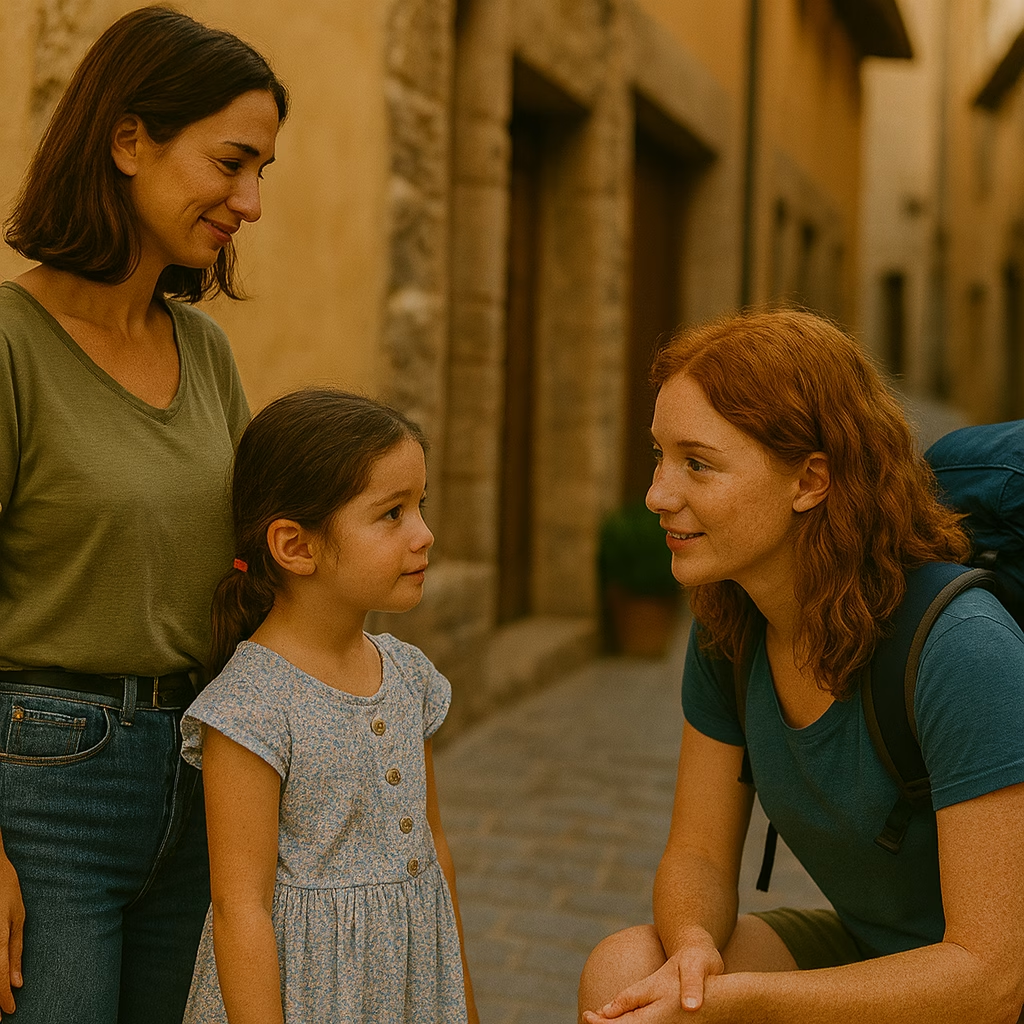
Language and communication tips in Spain help the would-be traveler understand Spain’s diverse cultures and languages and add richness to any hiking adventure — whether you’re walking the Camino de Santiago, trekking in the Pyrenees, or exploring the rugged northern coast. While Spanish (Castellano) is widely spoken throughout the country, regional languages such as Catalan, Basque (Euskara), and Galician bring unique identity to each area. Understanding basic phrases and local customs helps hikers communicate respectfully and confidently during their journey.
This guide covers the essential languages, practical hiking phrases, signage tips, and communication strategies for international hikers in Spain.
➡ Back to: Hiking Spain → Practical Travel Logistics → Language & Communication Tips
Languages Spoken Across Spain
Spain officially recognizes multiple languages, and you’ll see them reflected in road signs, menus, and conversations depending on where you hike.
Spanish (Castellano)
Spoken nationwide, it’s the main language used for:
government and transportation
hotels, hostels, and albergues
restaurants and shops
emergency services
trail signage in most regions
Learning just a few key phrases goes a long way with locals.
Catalan (Català)
Spoken in:
Catalonia (Barcelona, Girona, Costa Brava)
Parts of Valencia
Balearic Islands
On trail signs and maps, you may see local variants like català, valencià, or mallorquí.
Basque (Euskara)
Unique, unrelated to Spanish or any other European language.
Spoken in:
Basque Country
Northern Navarra
Some villages and rural trails post signage only in Euskara, so familiarize yourself with basic terms.
Galician (Galego)
Spoken in:
Galicia — including the final sections of the Camino de Santiago
Galego feels similar to Portuguese. You will see bilingual signs almost everywhere.
Useful Phrases for Hikers
Here are simple phrases that will help you navigate trails, towns, and refuges:
Greetings
Hola — Hello
Buenos días — Good morning
Buenas tardes — Good afternoon
Buenas noches — Good evening/night
Hiking & Navigation
¿Dónde está el sendero? — Where is the trail?
¿Es este el camino correcto? — Is this the right way?
¿Cuánto falta? — How far is it?
Agua potable — Drinking water
Peligro — Danger
Albergues & Lodging
¿Hay camas disponibles? — Are there beds available?
Necesito reservar — I need to reserve
¿Dónde está el baño? — Where is the bathroom?
Dining
¿Tiene menú del día? — Do you have the daily menu?
Vegetariano / Vegano — Vegetarian / Vegan
La cuenta, por favor — The check, please
Trail Signage & Markers
Camino de Santiago: Yellow arrows & scallop shells (vieira)
GR routes: Red and white stripes
PR routes: Yellow and white stripes
Local trails: May differ by region — Catalonia uses its own system
In multilingual regions, signs may alternate languages or use icons instead of words.
Communication Tips for Travelers
Speak slowly and clearly
Many locals understand basic English, especially in tourist areas, but simple Spanish is appreciated.
Use gestures
Maps, pointing, and basic hand signals help bridge gaps in rural areas.
Have offline translation tools
Download Spanish and regional language packs into:
Google Translate
DeepL
iTranslate
Learn the Camino greeting
Buen Camino is the universal phrase of encouragement for pilgrims.
Respecting Local Language Identity
Spain’s regional languages carry cultural pride. Using even a few local words — gràcies in Catalan, eskerrik asko in Basque, grazas in Galician — shows respect and often sparks warm connections with residents.
Real-World Example: Language on the Camino
On the Camino Francés:
Spanish is dominant in Navarra, La Rioja, and Castilla y León
Basque appears in small mountain villages
Galician takes over as you approach Santiago
Pilgrims often communicate through simple Spanish, gestures, and smiles — it creates community regardless of language level.
Language & Communication Tips – Conclusion
Communication in Spain is friendly and accessible, and hikers who embrace local languages enrich their travel experience dramatically. With just a handful of phrases and an understanding of regional differences, you’ll navigate trails, villages, and guesthouses with confidence and respect.
Whether you’re asking for directions in Spanish, ordering food in Catalan, or learning a few Basque greetings, each interaction becomes a meaningful part of your adventure.