
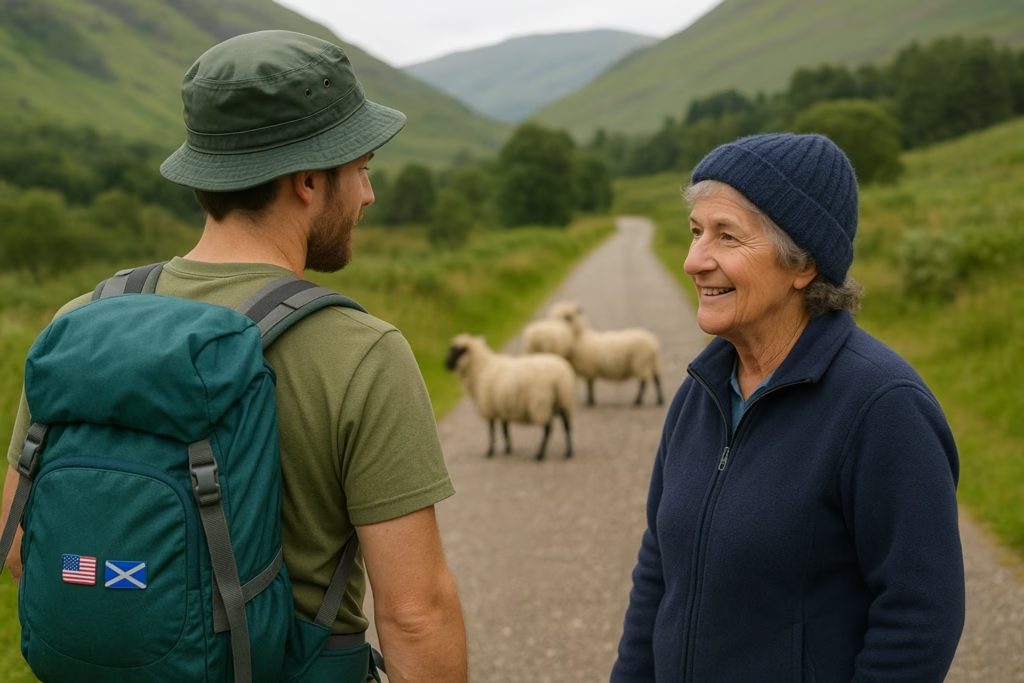
Language and communication for international hikers abroad is about more than just new landscapes — it’s also about navigating new languages and communication systems. Even in countries where English is common, hikers may find themselves in remote villages or on trails where translation apps and reliable phone service become essential.
From understanding key phrases in Spanish to buying a SIM card in Scotland or knowing how to ask for help in Canada, communication is a critical part of international hiking preparation.
➡ Back to: Hiking Scotland → Practical Travel Logistics → Language & Communication
Why Language & Communication for International Hikers Matters on the Trail
Emergencies – Being able to explain an injury or ask for help can save time.
Navigation – Asking locals for directions often helps more than maps.
Cultural Respect – Using a few basic phrases builds goodwill with local communities.
Connectivity – Staying in touch with loved ones requires local solutions for phones and internet.
Essential Language & Communication Tips for Hikers
Learn Key Phrases – Words for “help,” “food,” “water,” and “hospital” should be memorized in the local language.
Carry a Phrasebook – Small pocket guides are reliable when batteries die.
Download Offline Apps – Google Translate and similar apps work offline if pre-downloaded.
Practice Politeness – A simple “hello” or “thank you” in the local language goes a long way.
“As an Amazon Associate, I earn from qualifying purchases.”
Language & Communication Tools Abroad
SIM Cards – Affordable in Europe; buy a local or regional SIM for data and calls.
Wi-Fi Access – Common in cities and towns, but unreliable in rural areas.
Satellite Communicators – Devices like Garmin inReach ensure emergency messaging in remote areas.
Roaming Plans – Check with your provider before leaving; international roaming can be costly.
Safety & Connectivity Tips
Share Itinerary – Leave your route with someone at home and use check-ins via text or satellite message.
Keep Batteries Charged – Pair communication planning with [Electricity & Device Charging Tips].
Emergency Phrases – Write down key medical or safety phrases in the local language to carry in your pack.
Embassy & Consulate Contacts – Save phone numbers for your country’s embassy in case of legal or emergency issues.
Real-World Example: Hiking in Scotland
English is widely spoken, but hikers in the Scottish Highlands may encounter Gaelic road signs or local expressions. Buying a UK SIM card provides affordable data access for GPS and messaging. However, service can vanish in remote glens — a satellite device remains the safest backup.
Conclusion
Communication is one of the most overlooked aspects of hiking abroad — but it’s also one of the most important. With a few key phrases, the right tools, and a reliable connection plan, international hikers can stay safe, respectful, and prepared.
So before your next hike in Scotland, Spain, or Canada, pack not just your boots and tent — but also the knowledge to communicate across borders and cultures.