
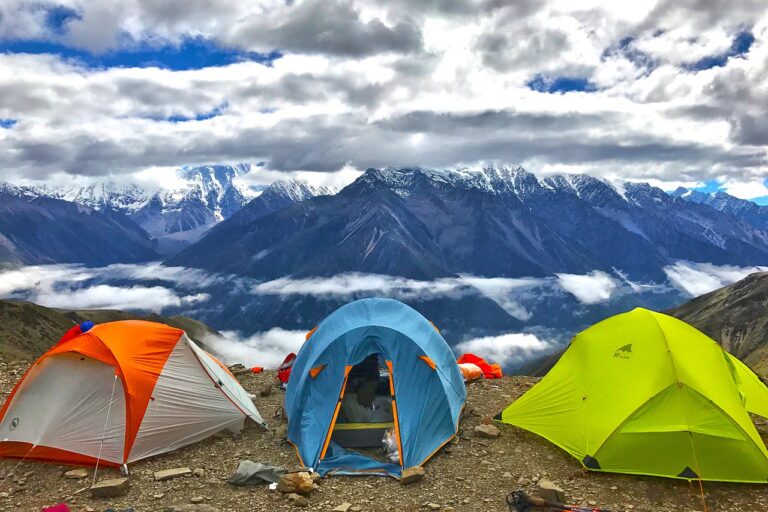
Tent Types
Choosing the right shelter starts with understanding the different designs available. This hiking tent types comparison explores dome, tunnel, geodesic, and more styles. Each tent type offers unique strengths for stability, space, and weight. Whether you hike in windy alpine terrain, rainy forests, or mild summer conditions, knowing which tent suits your trip makes planning easier.
1. Dome Tents – Popular Choice in a Hiking Tent Types Comparison
Dome tents are the most common shelter design for hikers. Their simple structure offers quick setup, balanced stability, and reliable weather resistance. Lightweight poles cross at the top to form a strong frame. This creates steep walls for headroom and comfort inside. Dome tents work well for three-season hikes and casual backpacking trips. In this hiking tent types comparison, dome tents stand out for their versatility and easy handling.
2. Tunnel Tents – Spacious Design for Longer Hikes
Tunnel tents use multiple parallel poles to create a tunnel-like shape. This design maximizes interior space and provides excellent sleeping room. They often weigh less than dome tents of the same size. However, tunnel tents depend on proper staking and guy lines for stability. They are best for calm to moderate conditions, not extreme winds. In a tent types comparison, tunnel shelters excel at space and comfort but trade some storm performance.
3. Geodesic Tents – Stability for Harsh Weather
Geodesic tents use several intersecting poles to form a web-like frame. This design distributes stress evenly across the shelter. The result is exceptional stability against strong winds, snow, and heavy rain. Geodesic tents are heavier than dome or tunnel types, but the protection is unmatched. In a hiking tent types comparison, geodesic models are ideal for mountaineering, alpine trekking, and severe backcountry conditions.
4. Semi-Geodesic and Hybrid Tent Options
Not all tents fit neatly into one category. Semi-geodesic tents balance weight and stability, offering more protection than dome tents without the full weight of geodesic. Hybrid designs mix dome and tunnel features, giving hikers flexible shelter choices. Including these models in a hiking tent types comparison highlights how manufacturers adapt designs for specific conditions.
Choosing the Best Tent Type for Your Hiking Style
Each tent type serves different needs. Dome tents suit casual hikers and three-season trips. Tunnel tents offer comfort and space for longer journeys. Geodesic tents provide unmatched strength in harsh weather. Semi-geodesic and hybrid designs strike a middle ground. By comparing these hiking tent types, you can match your shelter to your terrain, weather, and trip length.
“As an Amazon Associate, I earn from qualifying purchases.”
➡ Read more: Return to Tent Pillar Hub →
Choosing the right tent—and knowing how it performs in different weather—is key to staying safe and comfortable year-round. In this detailed video, The Outdoor Gear Review, presented by Luke, breaks down everything you need to know about tent design, materials, weather protection, and setup considerations. Watch to learn how to pick the right shelter for the conditions and use it confidently in any season.