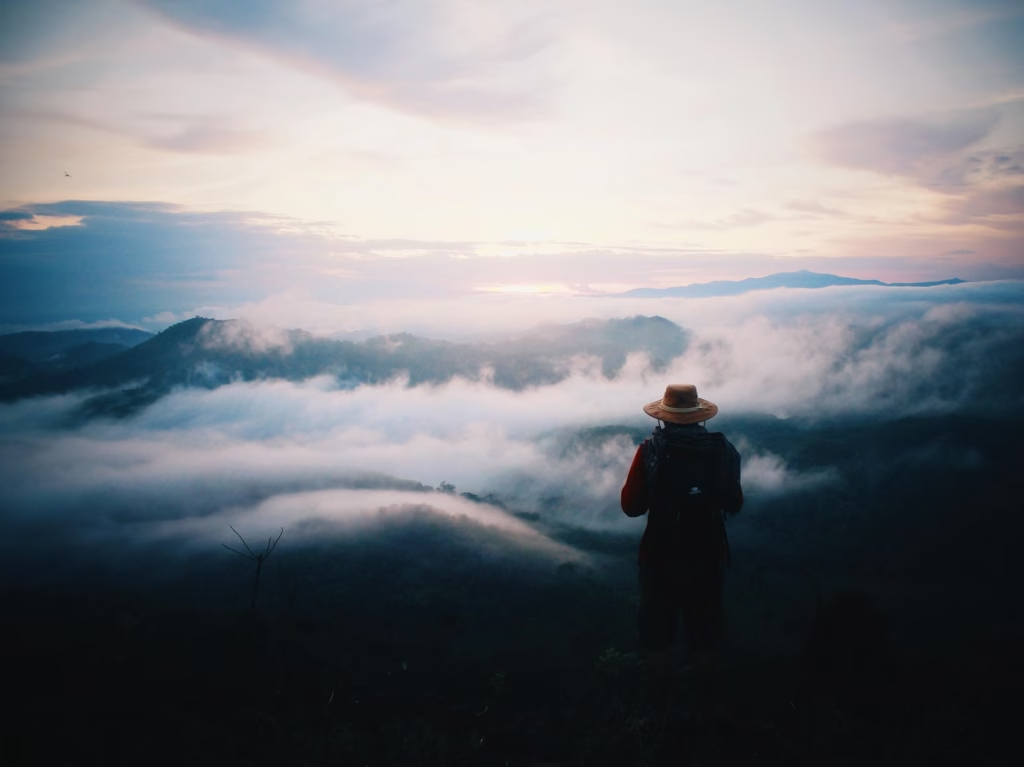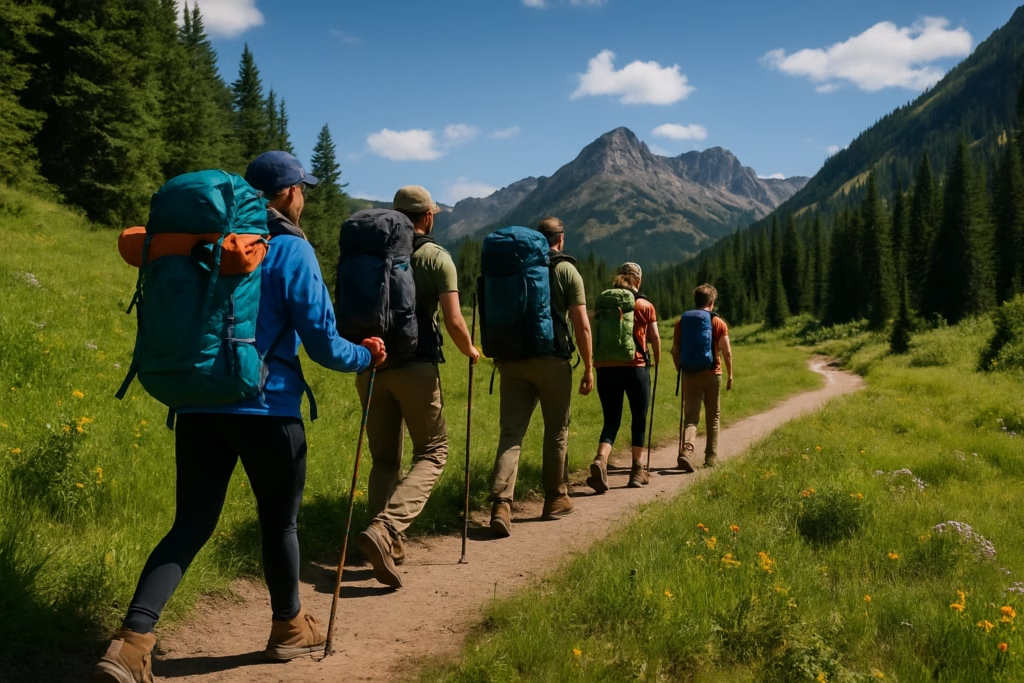
Solo or Group Hiking? The best choice depends on your goals, experience, and the terrain ahead. Solo hiking offers freedom, quiet, and the chance to set your own pace—perfect for building confidence, practicing navigation, and enjoying true solitude. But it also demands greater self‑reliance: route research, emergency planning, and strong situational awareness are non‑negotiable. Group hiking, on the other hand, adds social connection, shared decision‑making, and an extra margin of safety—especially on unfamiliar routes, in wildlife country, or during shoulder‑season weather. It does require coordination: matching fitness levels, clear communication, agreed turnaround times, and trail etiquette.
This guide compares the pros and solo or group hiking, with practical advice for safety, pacing, gear, and navigation in both scenarios. You’ll learn how to plan routes, leave trip details with a contact, choose the right communication tools (whistles, PLBs, satellite messengers), and set expectations for breaks, speed, and leadership when hiking with others. Whether you’re craving independence or community, we’ll help you pick the approach that fits the trail, the forecast, and your comfort level—so every mile feels intentional, safe, and rewarding.
Solo or Group Hiking: Which Trail Style Fits You Best?
The best hiking style depends on your goals, experience, and the trail ahead. Solo or group hiking each brings unique rewards and responsibilities.
Solo hiking offers unmatched freedom—you set the pace, make the calls, and move entirely on your schedule. It’s a great way to build confidence, practice navigation, and find quiet reflection. But it also requires solid planning, redundancy in gear, and strong situational awareness.
Group hiking, by contrast, thrives on connection and collaboration. It brings safety in numbers, shared decision-making, and extra morale when the terrain gets tough. The trade-off is coordination—matching fitness levels, pacing, and communication to keep everyone moving safely together.
Choose Solo When
The route is well-marked, within your fitness level, and weather is stable.
You want to practice navigation, test new gear, or enjoy solitude.
You’re prepared for self-rescue with extra essentials and conservative judgment.
Choose a Group When
Trails involve technical terrain, exposure, or complex junctions.
Conditions are uncertain, or the route is remote and water is limited.
Load sharing (shelter, stove, filter) makes travel more efficient and safer.
 Read more: For additional safety tips, visit First Aid & Safety Basics.
Solo Hiking Essentials: Freedom, Risks, and Safety Tips
Solo hiking delivers peace, focus, and self-reliance—but demands tight preparation. Without a partner to back you up, your margin for error depends entirely on planning, awareness, and discipline.
Advantages of Solo Hiking
Total control over pace, pauses, and route changes.
Constant skill feedback—navigation, timing, weather reads.
Deep mental reset and sense of independence.
Risks to Manage
Injury or illness without immediate help.
Navigation errors compounding over time.
Communication failure from terrain or battery loss.
Decision fatigue late in the day.
Solo Hiking Safety Checklist
Leave a written trip plan with your route, ETA, and emergency contact.
Carry redundant navigation: paper map, baseplate compass, and offline GPS.
Bring a PLB or satellite messenger and a whistle for backup.
Pack a headlamp with spare power, first-aid and repair kits, and extra calories.
Dress for changing weather: base layer, insulation, and waterproof shell.
When solo, set a hard turnaround time—and keep it. If the trail or weather changes, downgrade the goal. Solo hiking is freedom paired with discipline; plan conservatively and you’ll build lasting confidence.
Group Hiking Essentials: Roles, Pacing, and Turnaround Rules
Hiking with others adds safety and camaraderie but works best with structure. A well-run group shares decisions, communicates clearly, and respects each member’s limits.
Benefits of Group Hiking
Redundancy: more eyes on the route, extra first-aid and gear backups.
Shared workload: divide stove, shelter, and water treatment weight.
Morale boost: encouragement and accountability keep energy high.
Skill exchange: newer hikers learn pacing and navigation firsthand.
Avoid Common Pitfalls
Pace mismatch: the slowest hiker sets the pace.
Missed junctions: regroup at every intersection.
Groupthink: encourage honest feedback and alternate views.
Silent suffering: schedule fuel, water, and warmth checks often.
Assign Trail Roles
Leader: sets conservative pace and enforces turnaround.
Sweep: last in line, ensures no one falls behind.
Nav/Comms: tracks progress, weather, and device check-ins.
Medic/Repair: handles first aid and quick gear fixes.
Set a firm turnaround time based on daylight, not distance. Strong group structure ensures safety—and makes every team hike enjoyable.
Pre-Hike Planning: Route, Weather, and Check-Ins
Every safe hike starts before the trailhead. Whether you go solo or with a group, your pre-hike planning builds confidence and speed when decisions arise.
Plan the Route and Alternates
Map your main objective plus a shorter backup route and bailouts. Note distance, elevation gain, and water sources. Add a 20–30% buffer for rests, navigation, and photos.
Match to the Weather
Check temperature, wind, precipitation, and daylight length. Set clear go/no-go thresholds for lightning, heat, or cold stress.
Water and Food Strategy
Identify the longest dry stretch and carry enough treatment and capacity. Add electrolytes for heat or long climbs.
Trip Plan and Notifications
Leave a written itinerary with your emergency contact: route, alternates, ETA, and check-in times. If remote, include your satellite messenger ID and message plan.
Gear Verification
Map, compass, GPS, headlamp, first-aid and repair kits, insulation, and whistle—confirm each essential before you lock the car.
Good planning means fewer surprises, faster decisions, and safer miles.
Trail Etiquette and Mindset: Awareness and Respect
Great hikes rely on awareness and courtesy. Whether you’re moving quietly solo or with friends, follow trail etiquette that keeps everyone safe and preserves the landscape.
Right of Way
Uphill hikers have priority; downhill yields.
Stock animals always have the right of way—step aside and speak calmly.
Cyclists yield to hikers and stock on shared trails.
Sound and Spacing
Keep noise low and skip external speakers. Announce when passing, and tighten formation when meeting others or crossing narrow terrain.
Leave No Trace
Stay on durable surfaces, pack out all trash, and follow local toileting rules. Large groups should split into smaller pods if needed to reduce impact.
Mindset Reminders
Solo hikers: check surroundings frequently and trust intuition.
Groups: communicate early, regroup at every junction, and welcome dissent—it prevents accidents.
Respect the trail, respect others, and you’ll protect the outdoor experience for everyone.
Quick Reference: Smart Safety Habits for Every Hiker
Solo at a Glance
Benefits: freedom, solitude, and self-reliance.
Risks: no backup for injury or navigation errors.
Stay safe: leave a trip plan, carry redundant navigation, and keep conservative goals.
Group at a Glance
Benefits: safety net, shared knowledge, and morale.
Risks: pacing issues and groupthink.
Stay safe: assign roles, regroup at junctions, and enforce turnaround time.
Universal Checklist
Route + alternates
Weather thresholds
Water plan
Written trip notice
Map, compass, GPS
Comms devices
Light, insulation, repair, and extra calories
When any safety trigger—weather, fatigue, or daylight—hits, turn back without debate. Smart hikers finish safe and come back stronger.
“As an Amazon Associate, I earn from qualifying purchases.”